
How to Search Criminal Dockets
Start at Kansas CaseSearch, the Kansas District Court Public Access Portal. Pick Ellsworth as the court. Accept the terms. Then search with the identifier tied to the matter; a full case number works best. Party Name, Business Name, and Citation Number are supported too. Apply the Criminal filter when it appears. Once results load, confirm the basics. Check Ellsworth District Court, the case type, the filing date, the parties, and the public event history. A name match alone proves little, since people share names. Traffic-related matters sometimes hide outside the Criminal filter. Try Citation Number or a wider query. Remember, the public portal is one access channel, not the whole record system.
- Open Kansas CaseSearch and review its public-use terms.
- Select Ellsworth and choose the search type that fits the known identifier.
- Enter the full number or accurate public name and add date filters when needed.
- Open a match and verify court, case type, dates, and event labels.
- Use the courthouse terminal, call the clerk, or request the exact filing if the view is incomplete.
Ellsworth Criminal EW Numbers
Ellsworth County moved to its current case-number format on July 11, 2022. The official Smart Search instructions list EW as the county acronym. A working example looks like EW-YYYY-CR-000001. The year marks the filing year. CR marks the criminal family, and the trailing digits give the sequence. That string is a format example only, not a real case. Older Ellsworth criminal dockets often run YYYY-CR-000001, with no county prefix. Never graft a modern prefix onto an older number pulled from a pleading. Search the number you know first. Then fall back to the older form or a party-name query narrowed by filing date. Check the county listed on the result before trusting it as your criminal docket.
What a Criminal Docket Shows
Kansas Supreme Court Rule 21 names this chronology an events index. It is also called the register of actions. It is an index. Filings, actions, and events appear as entries. It may show that a motion or order exists even when the document itself cannot be opened remotely. Treat each field as a route to the source record. It is not a full account.
| Case number | Confirms the Ellsworth criminal docket and supports a precise clerk request. |
|---|---|
| Case type | Separates criminal matters from traffic, civil, family, and other cases. |
| Filing date | Places the case in time but may differ from the date of alleged conduct. |
| Charge or count | Records the public allegation when shown; an allegation is not a conviction. |
| Event label | May identify an arraignment, motion, hearing, plea, judgment, or continuance. |
| Status | Shows the recorded outcome, which may require the actual order for context. |
| Document access | Shows remote availability, not whether the complete courthouse file exists. |
Jot down when you checked the docket. A register of actions keeps changing as later filings, corrections, and settings are entered.
Ellsworth Criminal Filing Limits
One common mistake: reading an event label as the filing itself. The event is only the index entry. Kansas district-court access guidance keeps case information separate from court records such as complaints, motions, orders, and judgments. So give the clerk a case number, document title, and filing date when you want a paper. Transcripts follow the same rule. Under the 20th Judicial District rules, a court reporter request should be made at least 48 hours before a hearing. The requester bears the transcript expense. A short Ellsworth criminal docket entry is not word-for-word testimony. Ask the clerk whether a reporter was present and how to order the transcript.
Stages on a Criminal Docket
An Ellsworth County criminal docket often opens with a complaint or information. Then comes an initial appearance or arraignment. Bond activity, preliminary-hearing settings or waivers, motions, and pretrial dates may follow. A plea or trial moves the case toward disposition. Where applicable, sentencing or probation entries come next. Not every case walks one straight line. The chronology and the filed orders matter more than any guess about the next step.
Docket flow: Filing › Arraignment › Pretrial › Plea or Trial › Disposition › Sentencing
Under the local rules, magistrate judges may arraign defendants and accept pleas in felony matters. A magistrate entry on an Ellsworth docket does not make the matter municipal. Nor does it alone state the final outcome. Read court, judge, setting type, and later history together.
Ellsworth Criminal Workload Context
For county context without any names, the 2024 criminal-disposition workbook breaks down outcomes by county. The Ellsworth felony row shows 38 matters in the displayed total: 2 deferred or diversion outcomes, 5 dismissals, 28 guilty pleas, and 1 other outcome in the noted columns. The misdemeanor row shows 83 in the displayed total, with 30 deferred or diversion outcomes, 8 dismissals, 35 guilty pleas, 7 other outcomes, and 3 in the trial-related column.
These are statistical rows, not counts of unique people. Filings and outcomes can land in different years, and one case may hold several counts. The figures describe workload only.
Which Court Holds Criminal Dockets
The State of Kansas files its felony and misdemeanor cases in Ellsworth County District Court. Kristy Battershell, Clerk of the District Court, is the person to call for local records. Her office sits at 210 N Kansas Avenue, Ellsworth, Kansas 67439. The official district court page posts the phone number 785-472-4052. It also lists a public email, weekday hours, a fax line, and the county CaseSearch link.
Municipal matters run on a separate track. A city ordinance or municipal traffic case stays with the court that issued the notice. Start there. City of Ellsworth Municipal Court keeps its own process and citation lookup. Wilson, Kanopolis, Holyrood, and Lorraine post no similar public docket portal. Call the city office printed on the notice. And do not expect a municipal citation to surface in the statewide district-court search.
Ellsworth Criminal Access Channels
If CaseSearch comes up empty, try the public terminal inside the Ellsworth courthouse. Kansas Rule 22 splits access into two lanes. Remote users can reach one set of records. A courthouse terminal can show more. Some public information sits at the terminal but never appears online. A sealed or nonpublic record, though, stays closed no matter where you ask.
The district clerk is the next stop. Reach the office by phone, at the counter, or through a focused written request. Include what you know. List the case number you know, the court, the party name, an approximate date, and the exact item you need. The clerk can explain the gap. An older number or an excluded category may be behind it. So may a sealed or expunged record or an indexing delay. The Ellsworth County case search walks through each search field in more depth.
Ellsworth Expungement Source Image
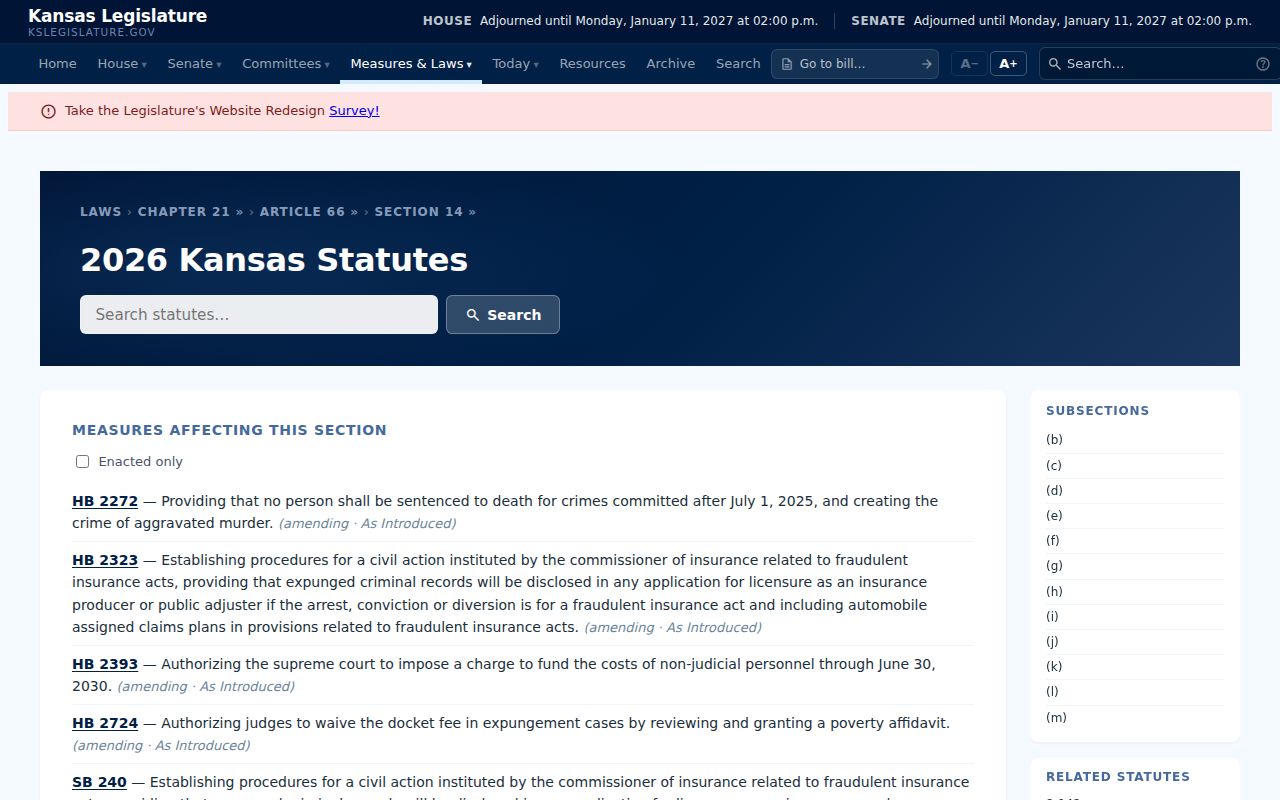
The Kansas expungement statute sets the rules for clearing an Ellsworth criminal docket entry.
An empty search result settles nothing. It only means the Ellsworth criminal record, if one exists, sits where the clerk keeps it, so ask the clerk of court before concluding a record is absent.
Public Access and Sealed Criminal Dockets
Kansas court rules control what the public can see of an Ellsworth County criminal docket. No promise of full online posting overrides them. Rule 22 sets out excluded categories. It also draws a line between portal access and terminal access. Rule 24 then guards personal identifying information. It covers certain addresses, account and identification numbers, dates of birth, and details about minors or protected victims.
Expunged and sealed matters will not surface in an ordinary search. And when a docket does appear, read it with care. A charge is only an allegation. A plea is a procedural event, not the whole story. The recorded outcome is the disposition. The order itself deserves a read before you settle on a short label.